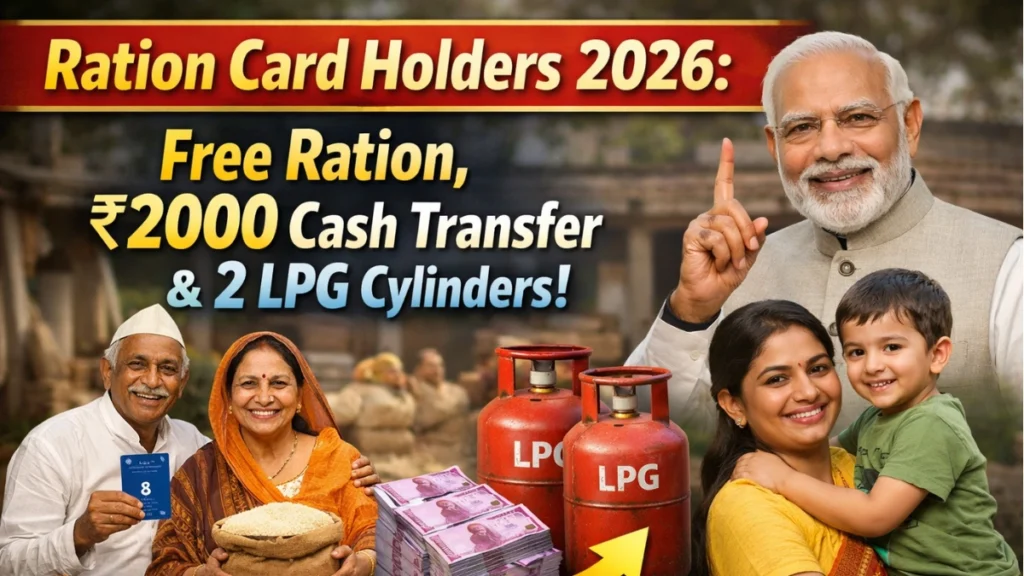
Ration Card Holders 2026: Ration cards continue to play a crucial role in supporting millions of households that rely on government welfare programs for essential food supplies. In 2026, discussions around expanding benefits for ration card holders have gained major attention, especially as governments focus on strengthening food security and providing additional financial relief to economically vulnerable families.
Recent policy updates suggest that eligible households may receive a combination of benefits including free ration supplies, direct cash assistance, and support for cooking fuel. These combined measures are aimed at reducing the daily financial pressure faced by low income families while ensuring that basic household needs remain accessible. For many citizens, these benefits could represent a meaningful step toward financial stability and improved living conditions.
Major Relief For Ration Families
Government welfare programs are designed to ensure that economically weaker families receive essential support during times of rising living costs. The proposed 2026 relief package focuses specifically on households that depend heavily on ration card benefits for their daily needs.
Under the updated plan, ration card holders may receive multiple forms of assistance rather than relying only on subsidized food grains. By combining food security with financial support and cooking fuel assistance, authorities aim to create a stronger safety net for millions of families. This integrated approach ensures that households can better manage essential expenses such as food, cooking fuel, and everyday necessities.
Free Food Security Support Continues
Free ration distribution has remained one of the most effective public welfare initiatives over the past several years. Through the Public Distribution System, eligible families receive essential grains like wheat, rice, and sometimes pulses either free of cost or at highly subsidized rates.
In 2026, the continuation of free ration support is expected to remain a priority. Ensuring access to basic food items helps families maintain proper nutrition without worrying about fluctuating market prices. This program particularly benefits daily wage earners, rural families, and economically vulnerable communities who rely on government food assistance to meet their monthly household requirements.
Direct Cash Transfer Assistance
In addition to food distribution, financial support through direct bank transfers is becoming an increasingly common welfare approach. The proposed benefit of approximately ₹2000 for ration card holders is intended to provide immediate financial assistance for essential expenses.
Direct Benefit Transfer systems allow governments to send funds directly to the beneficiary’s bank account, reducing delays and ensuring transparency in the process. The cash assistance may help families cover daily costs such as groceries, school materials for children, electricity bills, or basic healthcare needs. This additional support helps households manage short term financial challenges more effectively.
Cooking Fuel Relief For Households
Cooking fuel is a major monthly expense for many families, particularly those using LPG cylinders for household cooking. To address this challenge, the 2026 relief proposal includes the possibility of providing additional LPG cylinder benefits to eligible ration card holders.
Under the proposed support plan, households may receive up to two LPG cylinders through subsidy or direct benefit programs. This initiative aims to reduce the cost burden associated with cooking fuel while encouraging the use of cleaner and safer energy sources. For many families, access to subsidized LPG cylinders can significantly lower monthly expenses and improve overall household comfort.
Eligibility Criteria For Beneficiaries
Although the benefits appear promising, eligibility will likely depend on the type of ration card held by the household and the economic category of the family. Governments typically classify ration cards into several categories such as priority households and Antyodaya families.
Families falling under economically weaker sections are generally given priority when distributing welfare benefits. To qualify, households may need to ensure that their ration card information is properly updated and linked with necessary identification documents. Maintaining accurate records in government databases increases the chances of receiving benefits once the program is officially implemented.
Role Of Public Distribution System
The Public Distribution System remains the backbone of food security programs across the country. Through this system, essential food items are distributed to eligible beneficiaries at fair price shops located in both urban and rural areas.
The expansion of benefits for ration card holders builds upon this existing infrastructure. By using the established distribution network, authorities can ensure that benefits reach beneficiaries efficiently. The PDS system has proven effective in reaching remote communities and ensuring that basic food supplies remain accessible to families who need them the most.
Financial Stability For Low Income Families
Rising inflation and increasing living costs have made it more challenging for many households to maintain financial stability. Programs that combine food support with financial assistance can help reduce the pressure faced by low income families.
The combination of free ration supplies, cash transfers, and LPG support can significantly reduce monthly household expenses. When families spend less on essential items, they are better able to allocate their limited income toward other important needs such as education, healthcare, and housing improvements. This type of support contributes to improving the overall quality of life for vulnerable communities.
Impact On Rural And Urban Communities
Both rural and urban households can benefit from expanded ration card support programs. Rural families often rely heavily on government schemes due to limited employment opportunities and fluctuating agricultural income.
At the same time, urban low income households face rising rental costs, transportation expenses, and higher prices for basic goods. Welfare programs that provide food security and financial relief can help bridge the gap between income and expenses for these families. Ensuring that benefits reach both rural and urban communities helps create a more balanced and inclusive support system.
Importance Of Updated Documentation
For households hoping to receive benefits under the expanded relief program, keeping documentation updated is extremely important. Ration cards linked with Aadhaar numbers, bank accounts, and other identification records help streamline the verification process.
When beneficiary details are correctly recorded in government databases, authorities can distribute benefits more efficiently through digital platforms. Families should regularly check their ration card status, update household details if necessary, and ensure that their bank account information is active for receiving any financial assistance.
Long Term Welfare Strategy
Expanding benefits for ration card holders reflects a broader strategy focused on strengthening social welfare systems. Governments are increasingly exploring ways to combine food security programs with financial assistance and energy subsidies.
Such integrated support programs help address multiple aspects of household expenses at the same time. Instead of offering a single benefit, comprehensive welfare plans aim to improve overall economic stability for families. Over time, these programs can contribute to reducing poverty levels and improving living standards across various regions.
Final Word: Ration Card Holders 2026
The proposed relief measures for ration card holders in 2026 represent an important step toward strengthening support systems for vulnerable households. By combining free ration distribution with cash transfers and LPG assistance, the program aims to reduce financial stress and ensure that basic needs remain accessible.
Although final policy details will depend on official government announcements and regional implementation plans, the idea of expanding welfare benefits has generated optimism among many families. For ration card holders, staying informed about updates and maintaining accurate documentation will be key to accessing these potential benefits in the coming year.